WAMS vs GM Dealership: Module Replacement & Programming Explained
When a GM electronic module fails — such as an HMI, radio, BCM, or instrument cluster — the most common solution is to visit a dealership for replacement and programming.
That process works, but it is not the only way to restore factory operation.
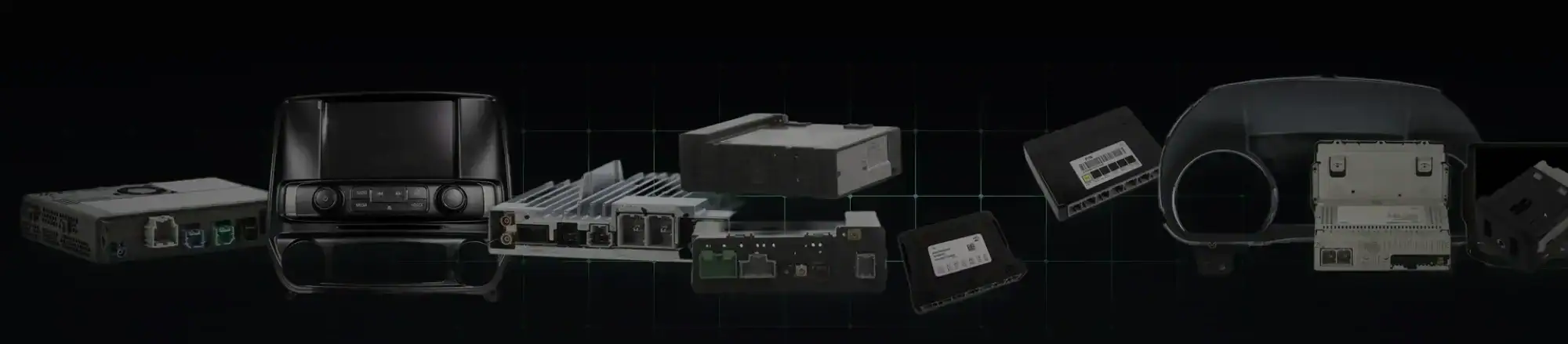
White Automotive & Media Services (WAMS) provides an alternative approach by supplying brand-new OEM GM modules that are pre-programmed to your vehicle’s VIN before shipment.
This combines hardware and programming into a single step, allowing many installations to be completed with minimal or no additional dealership programming depending on the application.
Both paths can lead to a properly functioning vehicle. The difference is how the hardware is prepared, where the programming happens, and how much time, labor, and coordination are involved.
Two Different Approaches to GM Module Replacement
GM Dealership Workflow
- Diagnose vehicle condition
- Order OEM replacement module
- Install module in the vehicle
- Program the module after installation using GM service tools
- Troubleshoot if additional configuration issues appear
WAMS Workflow
- Confirm compatibility before shipment
- Supply a brand-new OEM GM module
- Program the module to your VIN in advance
- Ship a ready-to-install unit
- Complete installation with a simplified workflow
The core difference is where the programming happens: dealerships typically program after installation, while WAMS programs before the module ever reaches your vehicle.
Replacement Modules — The Key Difference
At a dealership, module replacement usually involves several separate steps: ordering the part, scheduling installation, and then completing programming on the vehicle.
With WAMS, the module arrives already configured for your exact vehicle, including the appropriate software, calibration, and supported feature set.
This reduces installation complexity and eliminates many of the variables that can arise during on-vehicle programming.
For many customers, this means:
- Fewer steps to complete the repair or upgrade
- Less dependence on dealership programming appointments
- A more predictable installation process
- Factory-correct behavior from the start
Side-by-Side Comparison
- Hardware: Both paths use OEM GM components
- Module Supply: Dealerships order through dealer channels; WAMS supplies directly
- Programming Timing: Dealerships program after installation; WAMS programs before shipment
- VIN Matching: Dealerships complete it on-vehicle; WAMS pre-configures it in advance
- Install Process: Dealership workflow is multi-step; WAMS is simplified in many applications
- Dealer Visit: Usually required with dealer replacement; often not required with WAMS
- Troubleshooting: Dealer issues are resolved after install if needed; WAMS reduces these variables through pre-configuration
Cost Structure: Dealership vs WAMS
At a GM dealership, module replacement costs are typically separated into multiple components:
- OEM part cost
- Labor for installation
- Programming time and setup
- Additional diagnostic or troubleshooting time if required
With WAMS, these steps are handled differently.
Modules are supplied pre-programmed to your VIN, meaning programming is completed before shipment and does not need to be performed on the vehicle in most cases.
This often reduces total time, eliminates additional programming appointments, and simplifies the overall installation process.
Because of this difference in workflow, many customers find that the total cost of a WAMS solution is comparable to — and often lower than — a full dealership replacement process, particularly when labor and programming time are considered.
Why VIN Programming Matters
GM modules are not universal.
Even within the same model year, vehicles can have different configurations that affect software behavior, communication between modules, and feature availability.
Dealerships typically resolve this during programming after installation.
WAMS resolves this before shipment, ensuring the module arrives configured specifically for your vehicle.
This is what allows many WAMS installations to function immediately without additional programming steps.
Beyond Standard Dealer Workflows
GM dealerships operate within defined service and programming workflows designed around factory repair procedures.
WAMS operates in a different space.
- OEM-style retrofits and feature additions
- Cross-platform module compatibility scenarios
- Configuration adjustments for modified vehicles
- Advanced programming scenarios not typically addressed in standard dealer workflows
This does not replace dealership diagnostics or warranty repair — it complements it.
WAMS is often the better fit when a project falls outside standard dealer workflows or when a fully pre-configured OEM solution is preferred.
When a Dealership Makes More Sense
- Unknown or complex electrical issues requiring diagnosis
- Warranty-covered repairs
- Situations involving multiple unresolved system faults
Dealerships are equipped for full diagnostic workflows and factory warranty processing.
When WAMS Makes More Sense
- You already know which module needs replacement
- You want to avoid multiple dealership visits
- You want OEM hardware configured correctly before installation
- You are upgrading or retrofitting OEM features
- You want a simpler replacement process with less on-vehicle programming
The Bottom Line
Both dealerships and WAMS use OEM GM components and proper programming methods.
The difference is where and how the work is completed.
Dealerships perform programming after installation.
WAMS performs programming before the module ever reaches your vehicle.
For many customers, that difference results in a faster, simpler, and more cost-efficient path to a factory-correct result.
Related resources: